Integration and foreigners’ council election campaigns in Germany
The councils that represent residents with a migration background have different names in different German states: the integration council in North Rhine-Westphalia, the Ausländerbeirat in Hesse, the Beirat für Migration und Integration in Rhineland-Palatinate. We prepare Turkish and German campaign communication for the lists and candidates standing in these elections.
Rules by state
- North Rhine-Westphalia: under Section 27 of the municipal code (GO NRW), the council must be formed in municipalities with at least 5,000 foreign residents, and with at least 2,000 when 200 voters request it. Two thirds of its members are directly elected, one third are city councillors. It is elected on the day of the local elections, most recently on 14 September 2025. Since 1 November 2025 the body has been called “Ausschuss für Chancengerechtigkeit und Integration”.
- Hesse: under Section 84 of the Hessian municipal code (HGO), municipalities with more than 1,000 foreign residents form an Ausländerbeirat; since a 2020 amendment the council may set up an integration commission instead.
- Rhineland-Palatinate: under Section 56 of the municipal code (GemO), municipalities with more than 1,000 foreign residents form a Beirat für Migration und Integration, whose members are elected for five years in a general, equal, secret and direct election.
Other states and municipalities name, require and elect such councils differently; the details are in the relevant municipal code and the municipality’s statute (Satzung).
Who can vote
The rules depend on the state. In North Rhine-Westphalia, non-German residents and people who acquired German citizenship through naturalisation can vote; voters must be at least 16, and those holding only a foreign nationality must have lived lawfully in Germany for at least a year. In Rhineland-Palatinate, foreign nationals, stateless people and naturalised citizens can also vote from the age of 16. Each municipality publishes the exact conditions in its election notice, and our content follows those notices.
The communication challenge
Many eligible voters do not know they can vote, especially naturalised citizens. A campaign therefore has to explain who can vote, where and how, as clearly as it introduces its candidates. We produce content in Turkish and German with one consistent design.
What we prepare
- List identity: name, logo or mark, colours and social templates
- Candidate introductions: portraits and short Turkish and German videos
- Voter information on eligibility, election day and polling stations, based on the municipality’s official notices
- List website or a single information page, including Impressum and privacy page
- Printed and digital material for announcements in associations, mosques and cultural centres
Filming in Germany, production in Gebze
We plan filming and meeting days in Germany in blocks. Design, editing, websites and social media are handled by the same team in Gebze. German copy is written by German-speaking team members and approved by the candidate’s team; Turkish versions and subtitles can be added on request.
Approval, rules and neutrality
Every visual, film, post and page is approved by the candidate or campaign team before it goes live. Party design guidelines are followed where they exist; compliance with election law and data protection (GDPR) is checked by the candidate’s team and legal adviser. We do not give legal advice; we provide a commercial service to the candidate who hires us and express no political views.
Our election projects
Campaigns we have run. Each card opens the project page; the videos come from the campaign playlists on the JASSİR YouTube channel.
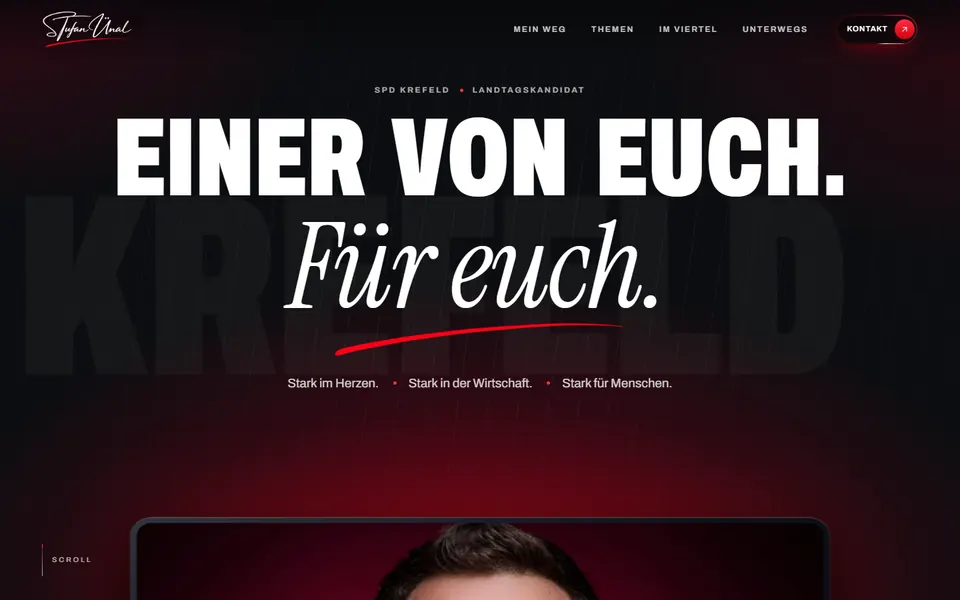

Abdurrahman Aslantaş
Election campaign communication: visuals, committee films, website
Gebze Chamber of Commerce election
How it works
- BriefingState, town, list, candidates and approvals; the municipality’s election notices are reviewed.
- List identityBilingual visual language and social templates.
- Candidate contentPortraits and short Turkish and German videos.
- Voter informationClear information on eligibility and election day.
- Election day and afterRule-compliant reminders; the archive is handed over.
Questions people ask us
When is the integration council elected?
It depends on the state. In North Rhine-Westphalia it is elected on the same day as the local elections, most recently on 14 September 2025.
Can naturalised citizens vote?
In North Rhine-Westphalia and Rhineland-Palatinate, yes. Age and residence conditions are set out in the municipality’s election notice.
Is this the same as the Ausländerbeirat in Hesse?
It is a similar body. In Hesse, municipalities with more than 1,000 foreign residents form an Ausländerbeirat; the name and rules depend on state law.
Which languages do you work in?
Turkish and German, with one consistent design.
Our guide covers the preparation in detail: 10 things to do before you run for office
Plan your list’s communication with us.
Tell us your state, your town and your list; we will propose bilingual content and a schedule.